

Although management puts in place internal controls to ensure that the financial statements are more reliable and less prone to error, there are still limitations, such as the possibility of collusion. Even if certain transactions require supervisor approval, if a lower level staff member and his/her supervisor work together to authorize the transaction, the internal control is not very effective at preventing such a fraudulent act. The perpetrators were able to commit fraud because the victim organization lacked strong internal accounting controls.
Preventive vs. Detective Controls
Control activities are the policies and procedures to carry out management directives to mitigate risks. Internal controls are essential for maintaining an organization’s financial health and operational efficiency. They help protect assets, ensure accurate reporting, and promote compliance with laws. Anchoring an effective control system is a culture that values ethics and seeks to be free of fraud, dishonesty, and corruption.
- This adds a further layer of responsibility to accounting procedures because it proves that the appropriate managers have analyzed and approved any transactions.
- In refreshing our knowledge – in terms of understanding what internal controls are, accounting professionals can start with the objectives of strong internal controls.
- Examples include validation checks on data entry and system-based access controls to prevent unauthorized use.
- Without robust internal controls in place, the wrongdoers can manipulate documents and data, misrepresent the company’s performance, and commit outright fraud.
Examples of Internal Controls in Accounting

Internal Controls in accounting are specific procedures, methods, and mechanisms organizations implement to assure the accuracy and validity of their financial statements. The fifth internal control that every finance team should implement is periodic trial balances. This gives your finance team a financial snapshot of specific moments in time (e.g. a quarterly report) that allows you to effectively compare your numbers against previous balances. A trial balance typically lists all general ledger accounts and their ending balances (debits or credits). And if the total debits don’t equal the total credits, you know there is an inconsistency somewhere in the books.

Management
Smaller organizations need to implement compensating controls to help ensure supervision and monitoring by management or those charged with governance. A structured and systematic approach is required to achieve successful implementation of internal controls. Following sequence reflect the structured approach to implementation of controls. Soft controls are intangible or less easily measured controls, often related to the culture and ethics of an organization, such as management’s tone at the top and employee’s behavior. Integrity and ethical values, the operating https://www.bookstime.com/ style of management, open communication channels or competence and the morale of employees are the prime examples. Reporting objectives refer to the reliability of both external and internal financial and non-financial reporting.
- Internal controls are a powerful tool to protect an organization’s interests and assets.
- Internal controls are concerned with satisfying at least one of the following criteria within the accounting system.
- A solid internal control system drives consistency, which in turn boosts operational efficiency and allows management to monitor the firm’s performance and confirm that the business is achieving its goals and objectives.
- In the old days before debit cards, when you drove up to a gas station to fuel up, there were attendants with wads of cash in their pockets to make change for customers who regularly paid in cash.
- Using automated reconciliation software can help streamline the process and improve accuracy.
- Internal controls are policies, procedures, and mechanisms designed to safeguard assets, prevent fraud, and ensure financial accuracy.
- Protecting assets and stopping unauthorized access are crucial security goals.
- While no two internal control systems are identical, many core principles regarding financial integrity have become standard management practices.
- The right internal control framework (think bank reconciliation or quality control) provides the checks and balances that can prevent honest errors.
- Internal controls are processes and records internal to a company, specializing in upholding and maintaining financial and accounting integrity of information.
- With financial data increasingly stored online, businesses must invest in cybersecurity tools such as encryption, firewalls, and multi-factor authentication.
Regularly reviewing transaction changes and access logs is crucial to ensure that only authorized personnel are making changes, leading to prompt identification and investigation of suspicious activity. Detective internal control in accounting is a mechanism designed to identify anomalies and mistakes that have already occurred within the accounting system or business processes. These controls serve as a safety net for catching irregularities and errors after they have happened and may have been missed by preventive controls. An example of separation of duties would be fThe second measure every finance team should implement are access controls. These are the policies, procedures, and mechanisms that a finance team puts in place to control and monitor the access to financial data and systems within an organization. Access controls accounting internal controls play a crucial role in safeguarding sensitive financial information by restricting access to data, and prevent unauthorized individuals from tampering with or misusing critical financial information.
It is called segregation of duties, and it ensures that, daily, one person does not have control of booking and paying invoices. After the internal control structure is in place, the firm should monitor its effectiveness and make any needed changes before serious problems arise. In testing components of normal balance the internal control structure, companies base their thoroughness on the risk assigned to those components.
Detective Internal Accounting Controls
Liquid assets always need to be protected more than illiquid assets because they are more easily stolen. Cash is the most liquid asset and can be pretty easily stolen by any employee who handles it. A system of internal controls tends to increase in comprehensiveness as a firm increases in size. This is needed, because the original founders do not have the time to maintain complete oversight when there are many employees and/or locations. Further, when a company goes public, there are additional financial control requirements that must be implemented, especially if the firm’s shares are to be listed for sale on a stock exchange. Consequently, the development of a system of internal control requires management to balance risk reduction with efficiency.
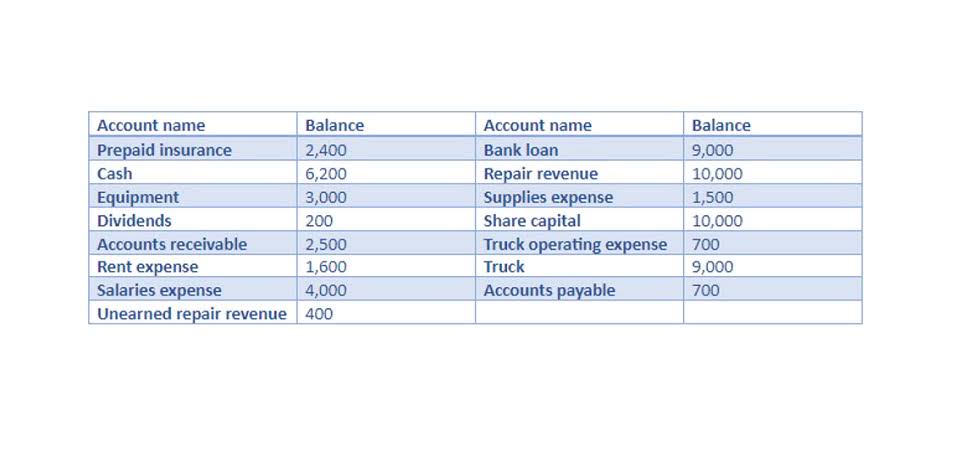
However, the following three groups have specific responsibilities regarding the internal control structure. These measures reduce the likelihood of errors and fraudulent activities, creating a safer business environment. Segregation of duties splits responsibilities to reduce mistakes and fraud. It stops one person from being able to both approve and record transactions.

Nearly 60% accountants report multiple reporting errors each month! AI enforces controls where they break first.
For example, Neeraj is a business owner who didn’t monitor his accounting records, choosing instead to let a trusted friend, Janet, make deposits. It would have been easy to catch that theft by simply matching the deposits from the bank statements to the sales receipts (which is how forensic accountants determined that Janet had skimmed $42,828.96 over 18 months). Entering into a new or complex financial transaction can mean growth and opportunity, but it’s rarely easy. From start-up funds to large global financial institutions, we assist organizations working to tap capital markets through securitization and meet their unique challenges in financial reporting and regulatory compliance.


0 Comments